Banks Thomas • 05 February 2012
Only, this sourcing trip was a little different than most. For the first time, Kevin Burk our Director of Sales and I travelled to Nicaragua with Andrew and Jeff, friends and partners from ThirstFirst. ThirstFirst is our exclusive provider of whole bean office coffee in the Lower Mainland.
Visiting Nicaragua for the first time can be an incredibly humbling and jarring experience. In Nicaragua they depend on coffee and there’s nothing quite like a trip to the northeastern part of country to drive that home.
Coffee in Nicaragua is normally sun dried however, the weather has been very wet this year so the coffee needs to be wrapped in black plastic (tamale style!) so it does not get wet.Day 1: Rain, rain, go away.Together, Jeff, Andrew, Kevin and I explored the grounds of the Soppexcca cooperative and I could tell right away by the look and size of the coffee lots that it was not business as usual.
Typically, the month of January is very hot and very dry in Nicaragua - ideal conditions to dry freshly washed coffee beans - only this year the rain would not let up. Many of the co-ops in this part of the world still rely on the sun-drying process, this is where coffee beans are laid out to dry in the open air on a cement patio, so unexpected wet weather can really affect a farmer’s output, not to mention put them weeks behind schedule.
Fortunately, Soppexcca did have a handful of seasonal lots for us to cup; only this visit was a not-so-subtle reminder for Jeff, Andrew, Kevin and I about the challenges that coffee farmers and co-ops around the world face when weather conditions are inconsistent.
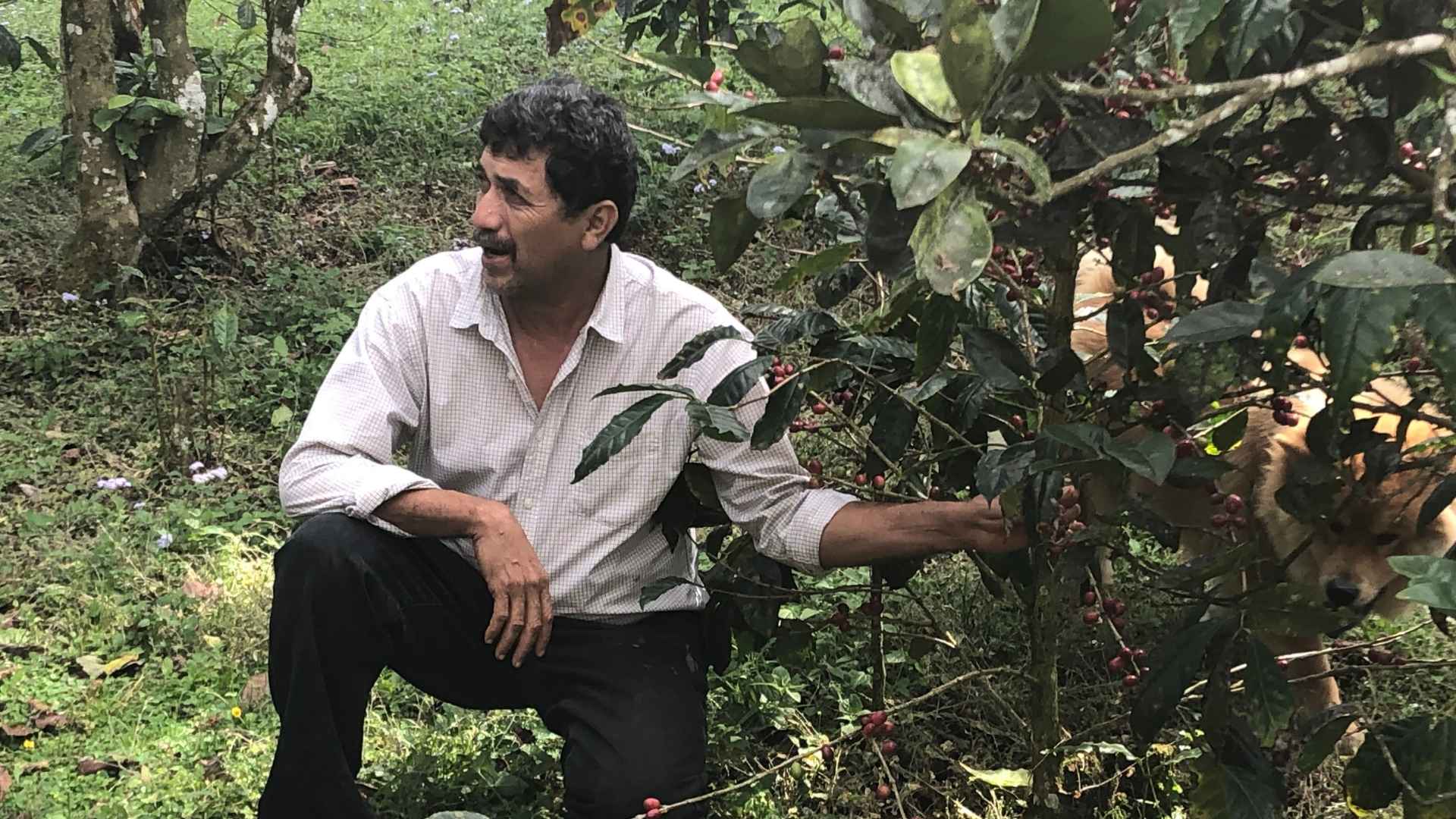
Finca Los Pinos - Byron sharing his thoughts on biodynamic coffee farming.Day 2: Organic coffee farming through the eyes of the grower.A sourcing trip to Nicaragua would not be complete without a visit to Finca Los Pinos in Jinotega, the home and coffee farm of our longtime direct trade partner Byron Corrales.
Not one to sit on his laurels, I’m always excited to see the creative varietal hybrids Byron and his team are working on in a given season. Byron met us at Sol café, the café inside Cecocafen co-op’s dry mill in Matagalpa, where we cupped some of his exceptional coffee before we headed out by truck to his farm. A biodynamic coffee farmer, Byron’s commitment to organic coffee production is second to none. Here’s what Jeff from ThirstFirst had to say about his time with Byron:
“The experience for me was very humbling. What Salt Spring is doing to better the lives of the people they deal with in Nicaragua is extremely heartfelt and fulfilling. I am that much more passionate about coffee, the processes and the industry now that I’ve seen it first hand. One thing that really hit home was the fact I use organic products because I feel they are better for me. And yes they are, but the real benefit of using organic products (coffee) is the positive impact it plays on the people growing the product.”
Andrew from ThirstFirst. After one hour picking, we each earned a little less than one Canadian dollar.Jeff’s thoughts echo those of Salt Spring Coffee wholeheartedly. When Mickey and Robbyn started Salt Spring Coffee in 1996 they set out to create a company with great coffee that doesn’t compromise the earth – or its people. Organic coffee production helps keep pesticides and chemicals out of waterways, like creeks and rivers, and helps to protect ground water too.
After visiting with Byron, we travelled to his sister’s coffee farm where Jeff, Andrew, Kevin and I were put to work picking ripe coffee cherries by hand. To put it in context, after one hour of picking I’d earned a little less than one Canadian dollar. The work is hard on the hands, and very detailed. Byron though, clearly got a great deal of joy watching us harvest his sister’s coffee cherries. His chuckles, coupled with his direction to “work faster”, I think, sums up his impression of our picking skills.
Despite the fact that they have faced some of the same weather-related challenges as Soppexcca co-op, Prodecoop has managed to produce some extraordinarily beautiful coffee this season. Out of the 12 coffees that we cupped, two in particular stood out: one from co-op José Alfredo Zeledón and the other from co-op Zacarias Padilla, both from the San Juan del Rio Coco region in northeastern Nicaragua (about a three-hour drive from Jinotega).
Cupping at Prodecoop.What excites me most about the cupping scores of these two coffees is that José Alfredo Zeledón and Zacarias Padilla are the two co-ops that received chippers last March (2011) through our Fair to Farmer Direct program. To be able to taste the difference the chippers have made, and to see these two coffee communities benefiting from the equipment is incredibly rewarding.
Like always, at the end of a sourcing trip I’m ready to head home and to see my family. Only in the back of my mind I’m already planning my next trip. I don’t know what it is about being on the ground in ‘coffee country,’ but I just can’t get enough.
Thanks to Jeff and Andrew from ThirstFirst for accompanying us on this incredible visit to Nicaragua. Until next time,
Banks Thomas, Director of Coffee
Banks Thomas • 30 January 2012
Sumatra High Density, Aceh Gayo.Well, it might be as simple as reaching for what’s on your countertop or using what’s available in the office kitchen, but at Salt Spring Coffee we're hoping to make your choice of brew method a little more intentional.
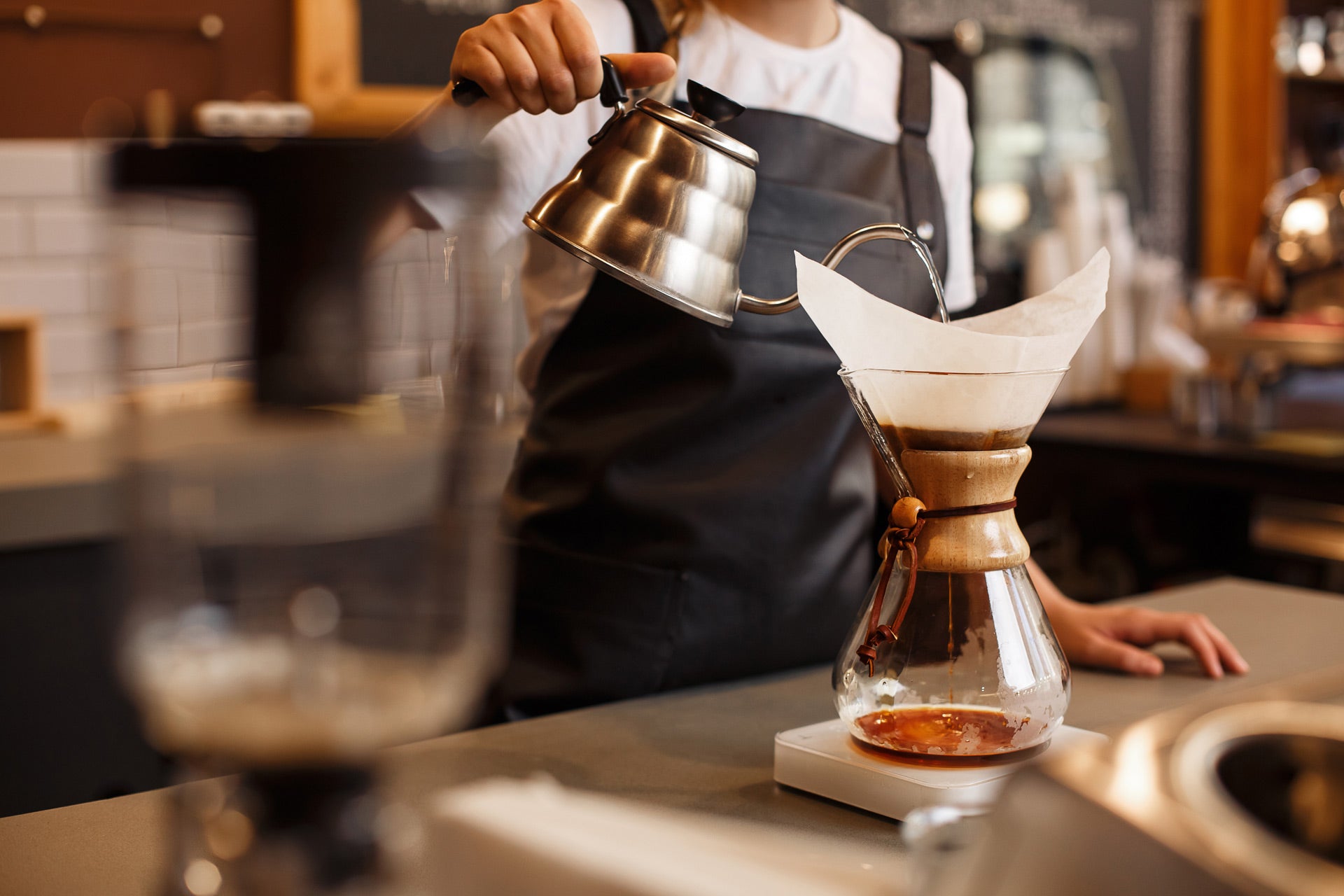
Brew method can really play-up or play-down certain characteristics of a coffee. On this site, there are two brewing tutorials: one for the French Press, and one for the Chemex. Water temperature, portioning and grind also play a big part, but the video tutorials are a good place to start to refine your skills.
My recommended brew method for our Sumatra High Density, Aceh Gayo is the French Press. Though very good as a single cup drip, the full-bodied nature of this Sumatran coffee really comes to life when it’s given the freedom to breath in a French Press. Giling Basah is what gives this coffee its body. Semi-washed coffee (referred to locally in the Aceh province of Sumatra as Giling Basah) is a process unique to coffee producers in Sumatra that tends to produce coffee with rich, full body.
Try the French Press here, I think you’ll be pleasantly surprised by what it reveals.
Enjoy your cup,
Banks Thomas, Director of Coffee
Banks Thomas • 16 January 2012
Peru, Finca Marin.Since creating our Fair to Farmer Direct program in the early days of 2010, we’ve used our direct trade model to build communities and relationships in distinct coffee markets like Peru, Indonesia and Nicaragua. Exploring new territory is big part of our pioneering spirit.
Recently, I visited the Copan region of Honduras - my first time in this small, Central American country. In the past, the beans produced in Honduras have had an average reputation, but a shift toward high quality coffee has rejuvenated the farms of the region. To get the full story, check out my recent blog post.
Travelling to up-and-coming coffee markets like Honduras, as well as established coffee markets like Peru gives us the chance to us to discover beautiful, untapped seasonal coffee. We actually discovered Peru, Finca Marin by chance in July 2010 while on a direct trade sourcing trip to the Villa Rica district of Peru.
One night, over dinner some staff from a local NGO told us about a neighbouring farm that they believed was producing exceptionally high quality coffee given the terroir of the region. Without hesitation we scheduled a visit to Finca Marin. And now, just a handful of months later, it’s yours to enjoy.
Enjoy your cup,
Banks Thomas, Director of Coffee
Banks Thomas • 06 January 2012
For the last three years we’ve worked hard to develop our Fair to Farmer (F2F) direct trade program in countries, like Indonesia, Nicaragua and Peru. And, while we’re still 100% committed to our partner co-ops in these countries and thrilled with the quality of coffee they’re producing, we like to keep an eye on promising coffee markets.
Travelling to up-and-coming coffee markets gives us the chance to us to discover beautiful, untapped seasonal coffee first hand. It also lets us develop personal relationships with coffee farmers and co-ops - one of the key pieces of our direct trade model.
Finca Popitos, co-op CapucasGenerally speaking, in recent years Honduran farms have had a reputation within the coffee industry for producing average beans. Though, lately things have shifted and the coffee industry is taking note.
Honduran co-op managers and coffee farmers have come to see - maybe because of the quality of coffee coming out of nearby Nicaragua - that if they want to secure a premium price for their green coffee beans they've got to produce a high quality product. So, with that said, we packed our bags and readied ourselves for our first sourcing trip to Honduras.
For this trip, we focused our attention on the Copan region in Western Honduras. Once we landed our first move was to track down Peter Rodriguez of Honduran Quality Coffee. Peter is the person to talk to in the Copan region when it comes to sourcing beautiful, seasonal coffee. With only three days to tour the region, Peter said that we had to visit co-op Capucas and co-op Cocafelol, both near Beneficio Santa Rosa. And, as with most trips, Peter proved that it’s incredibly helpful to know a local.
Capucas is about a one hour’s drive from Beneficio Santa Rosa in the Las Capucas, Copan region. Jose Omar, the co-op’s General Manager, kindly met me at the door and after a quick tour of the co-op's operations, he invited me to see Finca Popitos. Finca Popitos is, based on other farms I've seen, a shinning example of a quality coffee farm.
We also visited coffee farmer Jose Isidro Lara. Jose, Peter told me, is thought of as the ‘master of processing’ in the region. Jose Isidro Lara takes the processing of his coffee so seriously that he himself is the only individual allowed on his drying patio (a rarity in the industry given the amount of work associated with drying coffee). It’s clear to me, from Jose’s attention to detail that he's committed to producing premium coffee.
Near co-op CapucasAt Cocafelol we had the great pleasure of meeting General Manager and coffee farmer Roberto Salazar, who gave us a personal tour of the co-op. Once again, I was blown away by its cleanliness and the attention to detail at the co-op’s washing station and in its drying areas. What impressed me most though is Roberto’s commitment to coffee education – not just for direct trade buyers like us and visitors to the cooperative – but for his farmers.
Every season Roberto roasts, brews and tastes the co-op's coffee with the farmers. For me, this is incredibly telling. The vast majority of coffee farmers don’t taste or cup the coffee they produce. What this means is that they don’t get the chance to reflect upon the quality of coffee they've grown in a given season.
Giving the farming community the opportunity to taste their coffee means that they are much more likely to become invested in the quality of product they produce.
It’s true; the buzz about Honduran coffee in the Copan region is well deserved. Not only did I cup coffee that scored in the mid-80s and above at Capucas and Cocafelol, the management and day-to-day operations at each co-op impressed me. Given everything we’ve seen on this trip, and if weather conditions remain consistent in the region, we hope to share a Honduran coffee or two as part of our seasonal lineup this spring.
Cheers and until next time,
Banks Thomas, Director of Coffee
Banks Thomas • 03 January 2012
Papua New Guinea, Purosa.I think Papua New Guinea (PNG) is one of the most unique and complex countries of origin that we work with. Not only is PNG in the South Pacific, which means shipping and receiving the coffee can be a logistical challenge, the coffee plant continues to be the only cash crop in the country for many families.
Also nowadays it’s fairly common to see established co-ops working in countries like Nicaragua, Guatemala and Indonesia, yet in PNG it's individuals and families who are surprisingly still the country’s primary coffee producers.
My team and I experimented with the roast level of this season's PNG, Purosa a few times before we settled in on its sweetspot. As the coffee cools, you’ll notice that it becomes much more complex with key flavours of milk chocolate and nuts rising to the surface. The coffee also has a hint of fruit flavour at its finish, which is rounded out nicely by its well-balanced acidity and body.
This is the second season that we’ve offered a coffee from Papua New Guinea as part of our seasonal line-up and given our Purosa’s recent cupping performance there will be many more to come.
Enjoy your cup,
Banks Thomas, Director of Coffee
Page 1 of 13